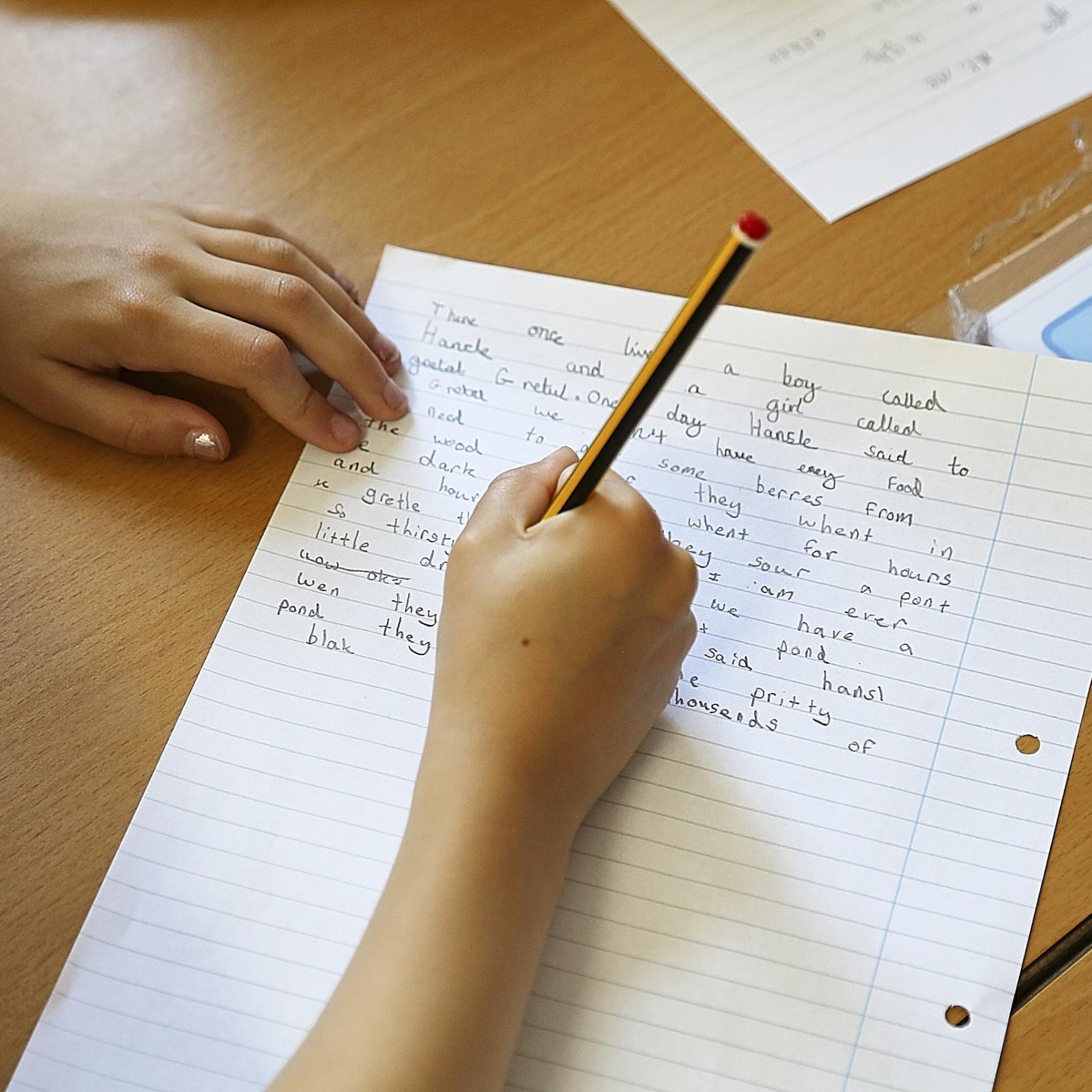
The start of it all – Phonics
In Reception and KS1, children learn to spell alongside learning to read, within the Little Wandle phonics lessons. This takes place in every lesson. Children are taught the strategy of saying the word they want to spell, segmenting the individual sounds they hear in the word onto their ‘segmenting fingers’ and then write down the letters that make the sounds to spell the words. A number of scaffolds support the children to learn this strategy, including grapheme mats. You can find the Reception grapheme mat here and the Year One here.
The English language is challenging and a number of words have such unusual spelling that they are taught as ‘tricky words’. Some tricky words stop being tricky words once children have met that more unusual spelling pattern. You can find a list of the tricky words for each Reception here and Year One here.
Spelling in Key stage 1
By the end of years 1 and 2, pupils should be able to spell a variety of words based on the phonic patterns they have been learning. Please look in the ‘downloads’ section below for examples of the kind of words children should be able to spell in KS1.
Spelling in Key Stage 2
In KS2 pupils are taught the spelling patterns and words identified in the statutory guidance of the National Curriculum for English from the Spelling Shed programme. KS2 children have a log-in for Spelling Shed where they can practise spellings set by the class teacher and play a variety of games that will support both their spelling and grammar. The Mastery Zone is particularly useful as it supports children’s individual spelling needs.
In addition to this, children are taught the word classes and sentence structure needed for them to progress in their understanding of the English language. Teaching is supported by the guidance in the National Curriculum for English and the Pegasus sentence construction ladders.