


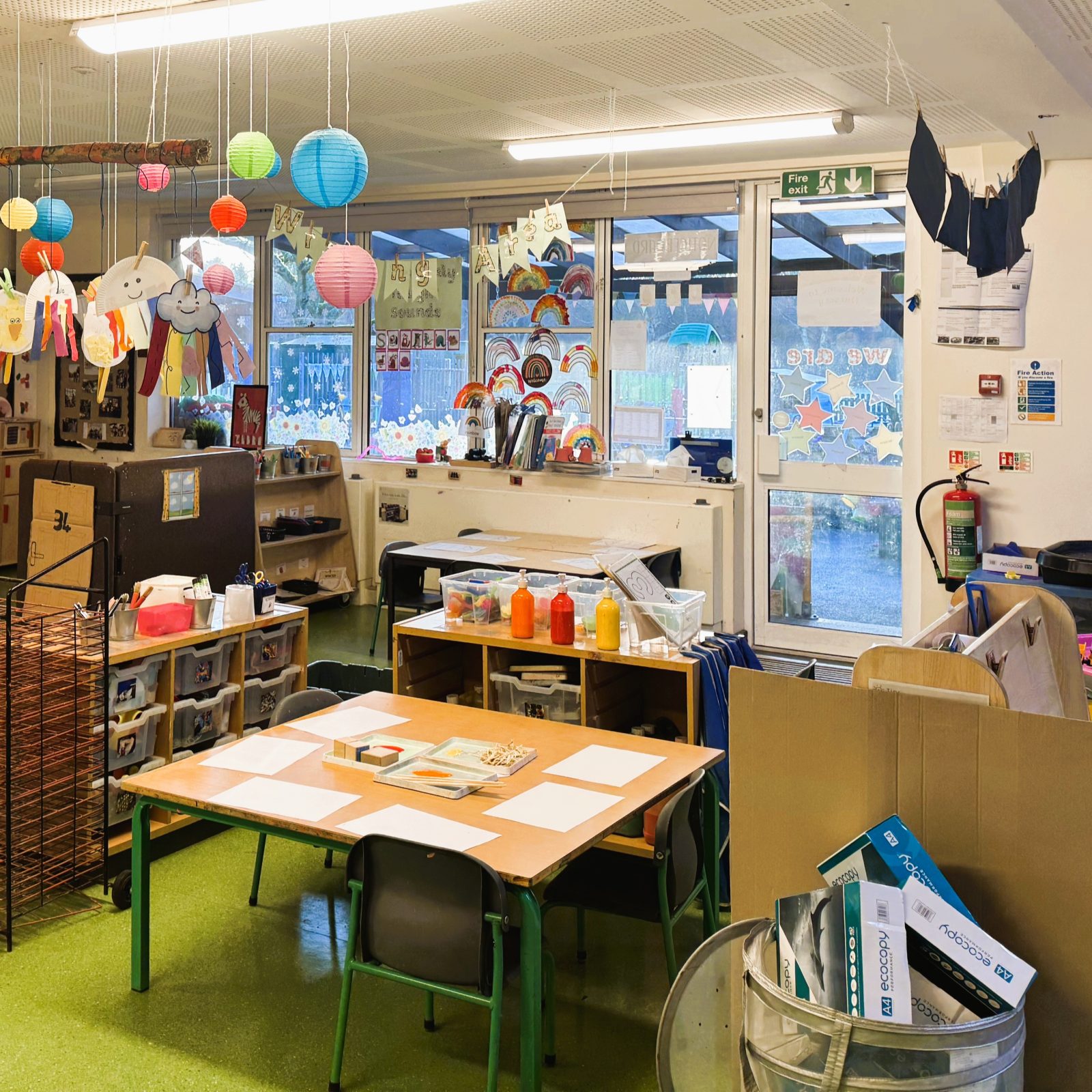
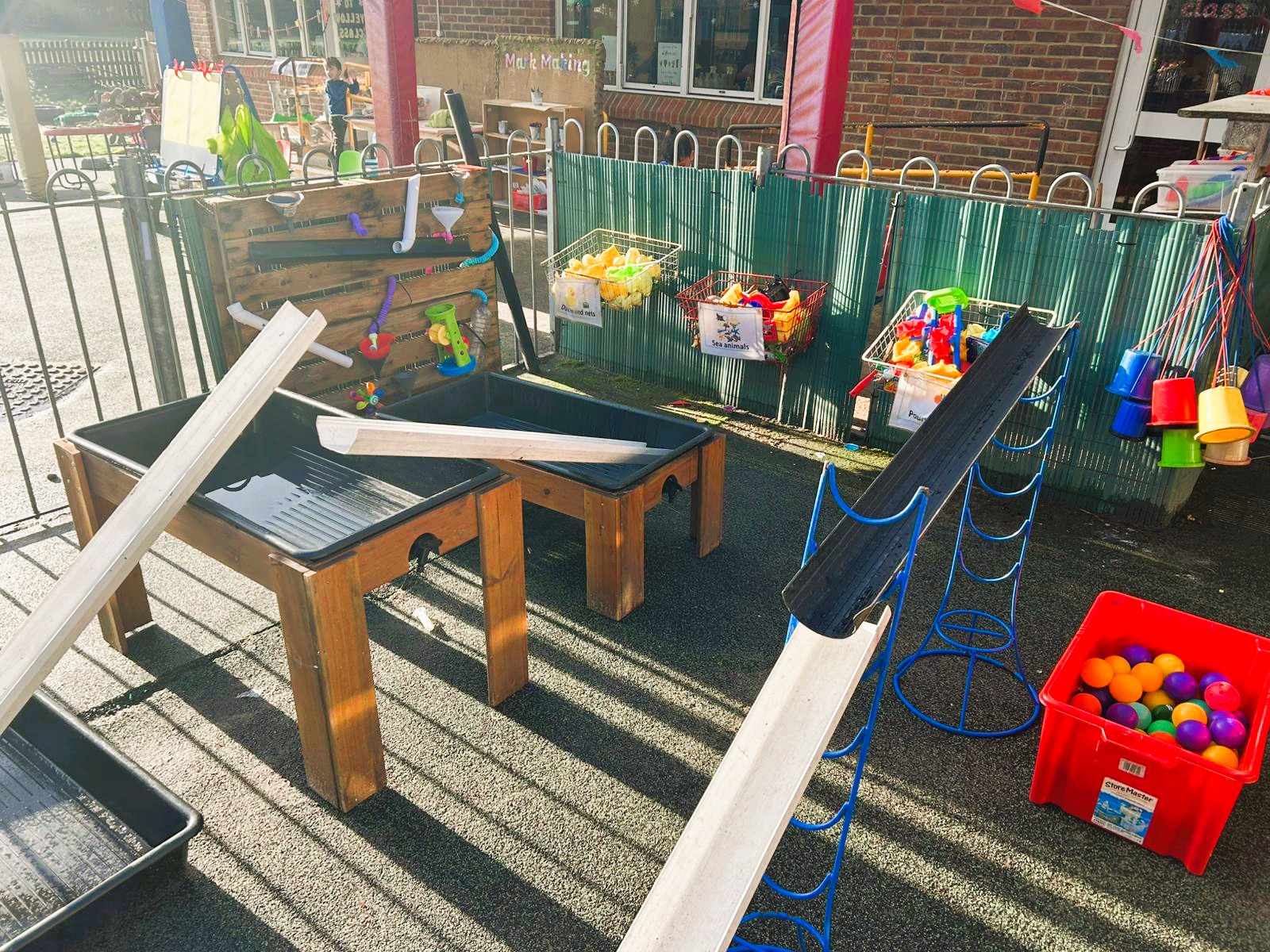
Little Atwood is situated in a large open-plan classroom which can accommodate children aged 3 and 4 years. There is a fully enclosed outdoor play space dedicated to the Nursery. Little Atwood is staffed with a qualified teacher who is ably supported by experienced teaching assistants.
HOW WE ORGANISE OUR LEARNING AT LITTLE ATWOOD
Children learning and developing to the best of their potential is at the heart of everything we do in Little Atwood. We understand that children are individuals and come to us with their own interests, strengths and personalities. We aim to nurture all our children and ensure that the foundations of their educational journey are solid. We recognise that each child is unique and learns in a complex way. Our experienced staff observe each child closely to identify the best way to take their learning forward.
In the Early Years Foundation Stage (‘EYFS’ – Nursery and Reception classes), practitioners follow the Statutory framework for the early years foundation stage, a document which sets the standard for learning, development and care for children from birth to five. There are seven Areas of Learning which are followed, all of which have equal weighting in terms of their importance. These are sub-divided into different aspects (in brackets below):
The Prime Areas:
- Communication and Language Development (Listening, Attention & Understanding; Speaking)
- Personal, Social and Emotional Development (Self-regulation; Managing Self; Building Relationships)
- Physical Development (Gross Motor Skills; Fine Motor Skills)
Specific Areas:
- Literacy (Comprehension; Word Reading; Writing)
- Mathematics (Number; Numerical Patterns)
- Understanding the World (Past and Present; People, Culture & Communities; The Natural World)
- Expressive Arts and Design (Creating with Materials; Being Imaginative & Expressive)
Characteristics of Effective Learning (CoEL) are an important element in the Early Years Foundation Stage Curriculum (EYFS). A child’s individual learning characteristic will determine the way they respond to both the teaching and learning taking place in the environment. Three characteristics of effective teaching and learning identified by the EYFS are:
- Playing and exploring – children investigate and experience things, and ‘have a go’;
- Active learning – children concentrate and keep on trying if they encounter difficulties, and enjoy achievements; and
- Creating and thinking critically – children have and develop their own ideas, make links between ideas, and develop strategies for doing things.
The focus of the CoEL is on how children learn rather than what they learn i.e. process over outcome. Underpinning the CoEL is the understanding that, during their earliest years, children form attitudes about learning that will last a lifetime. Children who receive the right sort of support and encouragement during these years will be creative, and adventurous learners throughout their lives.
The staff in Little Atwood plan learning carefully, ensuring that all the seven Areas of Learning are covered both inside and outside in terms of what opportunities are offered. Activities are altered or changed according to the interests of the children. Children are able to work in small or large groups and will also have dedicated 1:1 time over the week with their named Keyworker.
Foundations for Phonics
In Nursery, we use the Little Wandle Letters and Sounds programme, which runs throughout the school. This is a highly structured and systematic way to teach children to read.
In Nursery, much of the foundations of phonics comes through teaching children to tune in to sounds in the environment, as well as focusing on Nursery Rhymes. Click here to learn more.
Why are Nursery Rhymes so important? Click here to find out more…
How we keep parents informed at Little Atwood
At Little Atwood we appreciate the vital role that parents/carers play in their child’s learning journey. As the first and most enduring educator, parents/carers know their child the best and as practitioners, we value your input into each child’s learning and development.
We have daily conversations with parents/carers at drop-off and collection and most day-to-day feedback or any issues arising that day would be discussed in this informal manner. Each child has a reading diary which is used by the keyworker to record a weekly observation and possibly a target. We encourage an ongoing dialogue with parents/carers and love to hear how the children are getting on at home. The reading diary can also be used for parents/carers to ask the Nursery staff questions, especially for those whose children attend Breakfast or After School Care and may not see the Little Atwood staff on a day to day basis. Any queries can also be sent via email to the school office or a telephone call.
Any first aid incidents would be conveyed to parents/carers via a ‘white slip’ sent home, detailing the nature of the injury and any treatment given. A phone call would be made for any head injuries, facial injuries or anything deemed more serious than a graze or small cut.
There are Parents’ Evening Meetings in the autumn and spring terms, giving both parents/carers and teachers an opportunity to discuss each child in more detail. In the summer term, a written report is provided.
Weekly news items on the Pegasus Academy Trust website help to keep everyone updated as to the current themes and interests of that week and include photographs of children’s learning in action.


